

Saddlery's Root and Branch
For over 900 years the Saddler's Company has championed saddlery. Today that lives on through charitable support for education, equestrianism and heritage crafts, ensuring the trade, people and skills evolve and continue to thrive, forever.
Built Over 900 Years on Craft, Education and Excellence
A parchment dated between 1160 and 1193 is the earliest surviving record of a medieval guild responsible for the regulation of the saddlery trade, craft and standards in the City of London and the United Kingdom.
The Incorporation Charter of Richard II in 1395 remains the Company's most significant early Royal Charter, recognising the Saddlers as a body corporate. Through its sixth Royal Charter, granted by Queen Elizabeth II in 1995, the Worshipful Company of Saddlers retains its role as a champion and supporter of the trade, craft skills and equestrianism.
HRH The Princess Royal is the perpetual Master of the Saddler's Company.
Focused on the Future of the Saddlery Trade, Training and Equestrianism
Today, the Saddler's Company's activities are based on charitable foundations that support and encourage the development of saddlery, equestrianism and education, in particular where they coincide with disability and youth. The Company is focused on three areas.
In trade, it champions the craft of saddlery to ensure a successful, vibrant saddlery trade across research, design, manufacture and fitting. It supports the leatherworking and heritage craft skills required, and rewards excellence in the craft.
In equestrianism, the Company supports the role and welfare of the horse in today's world, collaborating throughout the equestrian network. It supports riders through better education, demonstrating the benefits of using a Registered Qualified Saddle Fitter, as well as awards across all types of riding events.
In charity, the Company administers three charitable trusts and a charitable fund, including Kitchin's Charity, founded in 1556, which supports the education and training of people under 25 in need.
Venue Hire at Saddler's Hall
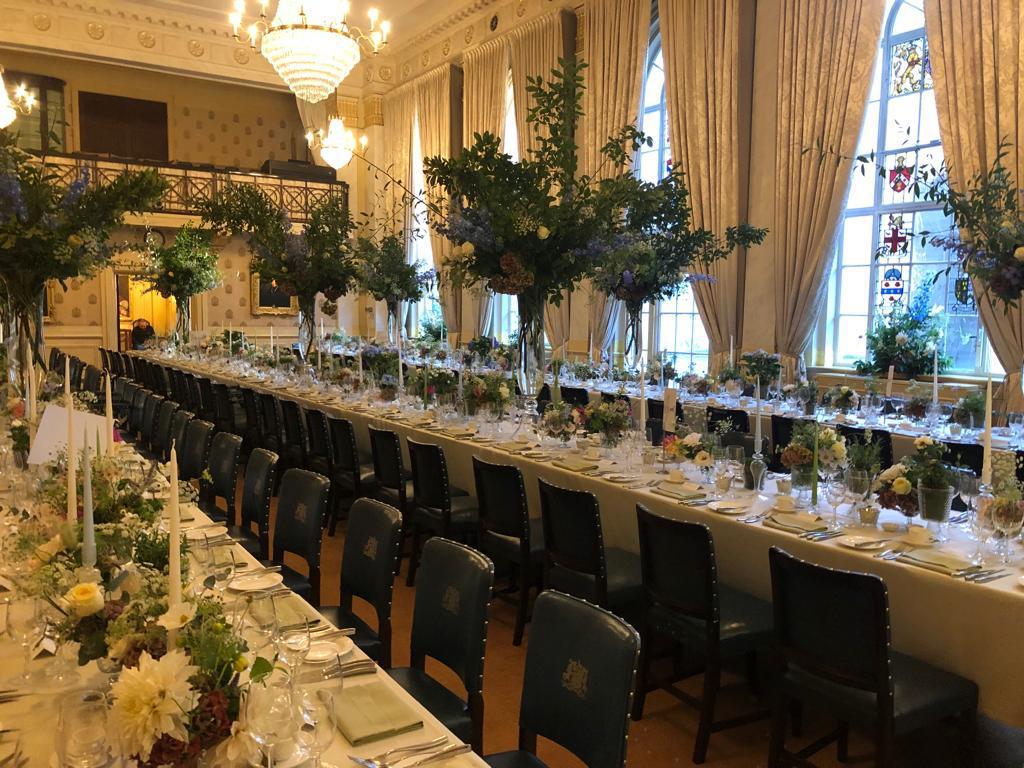
Saddler's Hall, 40 Gutter Lane, stands a few yards from St Paul's Cathedral. The Hall is available for private hire for weddings, corporate events and celebrations, with the Great Hall holding up to 250 guests for a reception and 150 for a formal seated dinner. Income from venue hire supports the Company's charitable works and support for trade and equestrianism.
Latest News and Stories

Eight Centuries in the City
London Saddlers Appear
The saddlers of London appear among the earliest of the City fraternities. The oldest surviving record, a parchment held in the library of Westminster Abbey, dates from 1160 to 1193.
Among the First Twelve
The Saddlers become one of the first twelve livery companies to be established in the City of London.
First Royal Charter
King Richard II grants the Company its Charter of Incorporation, confirming the Saddlers as the governing body of their craft.
Charter of James I
A new Charter is granted by James I, later reinstated in 1688 after the Glorious Revolution.
The Great Fire
Saddler's Hall is consumed by the Great Fire of London and rebuilt in the years that follow.
Founding City and Guilds
The Company is among the founders of the City and Guilds of London Institute, deepening its commitment to education.
The Hall Is Lost Again
The third Hall is destroyed by fire during the Blitz, and many of the Company's records are lost with it.
Royal Charter Renewed
The Company is incorporated by a new Royal Charter, granted by Queen Elizabeth II.
Frequently Asked Questions
What is the Saddlers' Company?+
The Saddlers' Company is the informal term for the Worshipful Company of Saddlers, a progressive City of London livery company. Formed as a medieval guild, its earliest surviving records date to circa 1160. This was formalised by Richard II's 1395 Charter, making it the first trade body responsible for saddlery standards and training. 900 years on, it retains this role through its active saddlery trade membership, educational partners and charitable giving, ensuring the United Kingdom's continued leadership in the saddlery trade and equestrianism.
When did the Saddlers' Company get its Royal Charter?+
The Company received its first Royal Charter, the Incorporation Charter, from Richard II in 1395. Later charters included those of James I in 1607 and Charles II in 1684, and its current governing Royal Charter, the sixth, was granted by Queen Elizabeth II in 1995.
Where is Saddlers' Hall?+
Saddlers' Hall is at 40 Gutter Lane, London EC2V 6BR, a few yards from St Paul's Cathedral. The nearest tube stations are St Paul's, Bank and Mansion House.